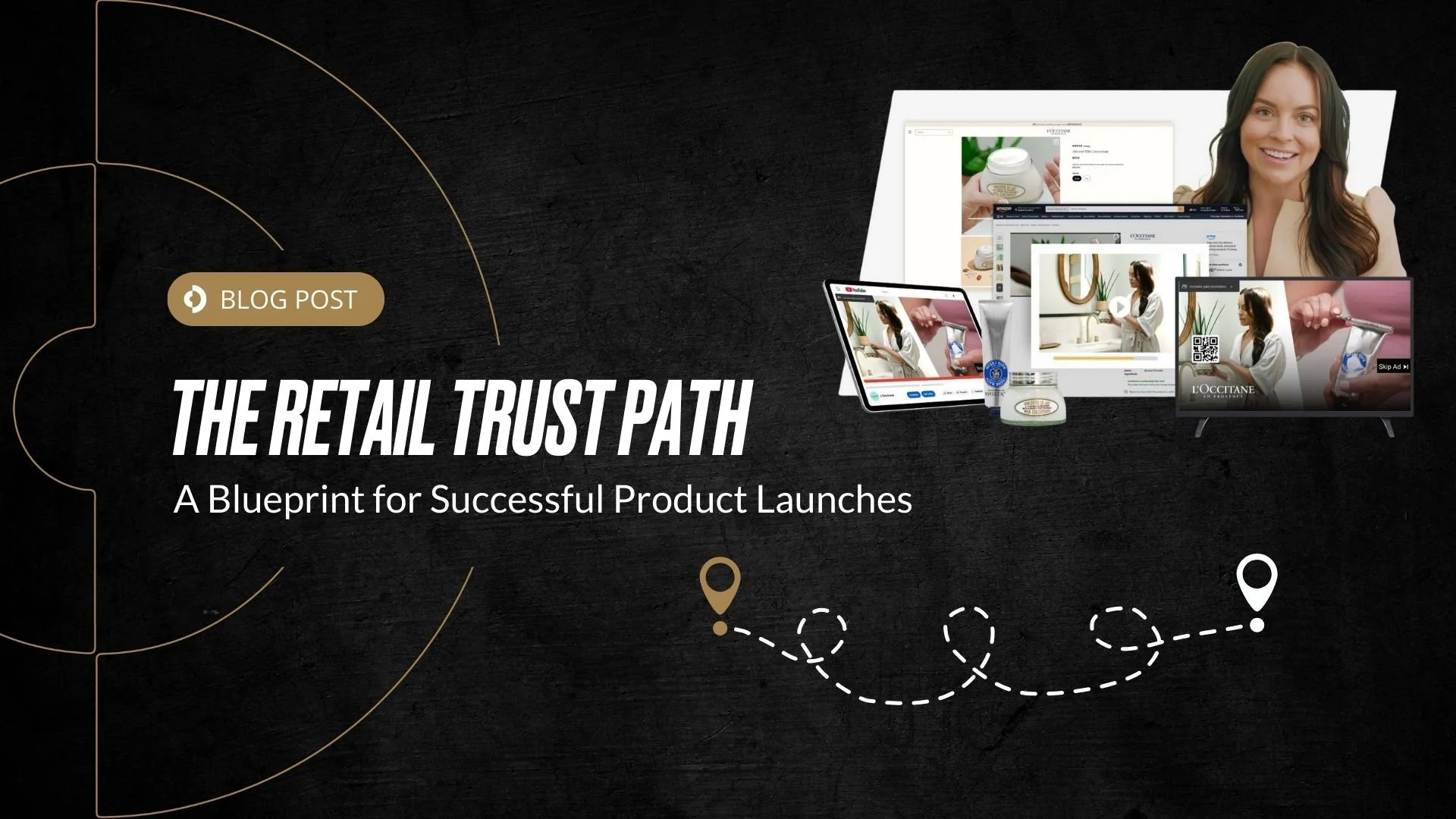
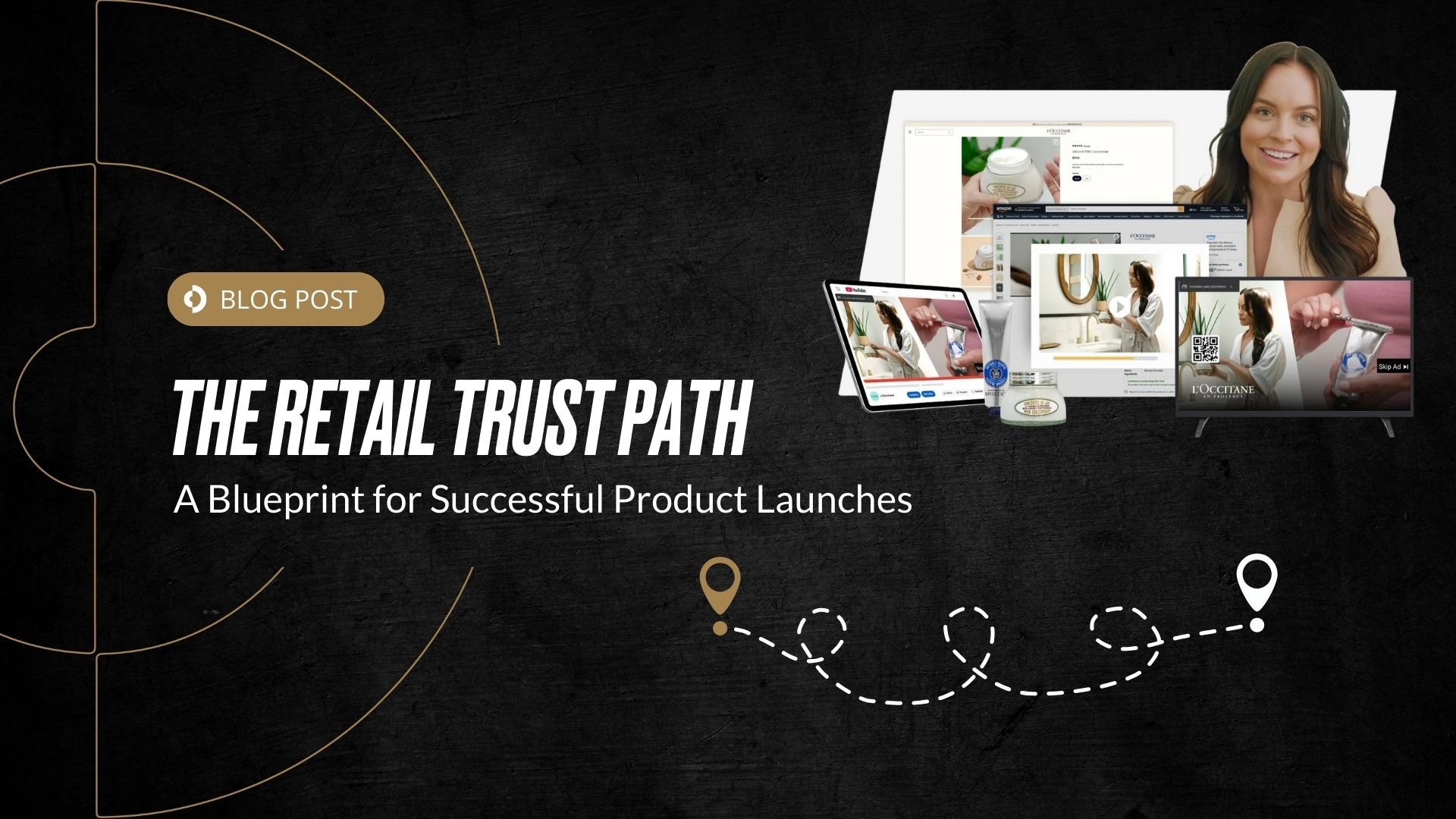
The Retail Trust Path: A Blueprint for Successful Product Launches
Launching a new product at retail is not just about awareness anymore. Shoppers are moving between TikTok, CTV, PDPs, and post-purchase emails in a single day. They compare, cross-check, and rely on trusted voices before they commit.
Brands that consistently win new product launches understand a simple truth:
Every touchpoint is either building trust or breaking it.
To help retail brands and retailers structure launches around that idea, we use The Retail Trust Path. It is a four-moment framework that connects the shopper journey to the type of content that creates confidence at each step.
Instead of thinking in terms of isolated campaigns, it turns the entire launch into a unified experience built around one engine: expert-led clarity.
The four moments are:
Inspiration - Trust the expert
Consideration - Trust the product
Conversion - Trust the brand
Loyalty - Trust the retailer
Let us walk through each one.
Moment 1: Inspiration
Channel: TikTok and social
Shopper need: Curiosity and proof that the voice is credible
Content job: Help the shopper trust the expert
At the start of the journey, shoppers are not actively shopping. They are scrolling on TikTok, Instagram Reels, or YouTube Shorts. In this environment, buyers are asking an unspoken question:
"Do I believe this person knows what they are talking about?"
This is where expert-first content earns its keep. When a hair stylist explains why a hair dryer matters for curl health, or a chef casually uses a new kitchen system in a recipe, the shopper gets an authentic entry point into the product.
Effective content in this moment:
Introduces the expert and their credentials
Shows the product in a real context, not a studio
Focuses more on "why this matters" than on feature lists
Leaves the shopper thinking, "I want to know more"
We are not trying to close a sale here. We are creating a reason to care and a reason to keep following the story.
Moment 2: Consideration
Channel: CTV and YouTube
Shopper need: Clear understanding of how the product works
Content job: Help the shopper trust the product
Once curiosity is sparked, shoppers move into research mode. They will search on YouTube, watch longer videos, or see your CTV spots while streaming. Here, the key question becomes:
"Does this product actually solve my problem in a way that fits my life?"
Content in this phase should:
Demonstrate the product step by step
Make features feel practical and not technical
Show different use cases or user types
Answer obvious objections before they even come up
Experts are still the guide, but now they are focused on education. A trainer explaining the benefits and limitations of a recovery boot, or a contractor explaining when a certain tool is ideal and when it is not, is far more persuasive than a pure commercial.
This is where shoppers move from "That looks interesting" to "I can see myself using this."
Moment 3: Conversion
Channel: PDP and in-club or in-store
Shopper need: Confidence in choosing this product right now
Content job: Help the shopper trust the brand
By the time a shopper lands on a product detail page or stands in front of a shelf, they already have some context. They have seen the expert. They understand the basics. Now the question shifts to:
"Is this the brand I should trust with my money?"
This is a critical moment. Confusing PDPs, missing details, or generic copy can undo all of the work that social and CTV did.
High performing content in this moment:
Shows an expert using the exact product that is for sale
Addresses specific shopper questions such as "Will this work on my hair type, skin tone, body size, home setup, or schedule"
Reinforces brand reliability, safety, warranty, and quality
Makes the next step very obvious: add to cart, buy in club, or scan a QR code to shop
Retailers and brands that align their PDP video, images, copy, and on-site messaging with what shoppers saw earlier in the path see higher conversion, fewer cart abandons, and a more consistent story across channels.
Moment 4: Loyalty
Channel: Post-purchase email and text
Shopper need: Support, validation, and long term guidance
Content job: Help the shopper trust the retailer
The story does not end at the transaction. After the purchase, shoppers have a fresh set of questions:
"Did I set this up correctly"
"How do I clean or maintain this"
"What else can this product do that I might not realize"
Post-purchase content that features experts answering these questions does three things at once:
Reduces returns and negative reviews
Increases satisfaction and repeat use
Strengthens the shopper's relationship with the retailer who "had their back"
Think of this as onboarding for physical products. Quick how to videos, maintenance tips, and troubleshooting content build a sense that the retailer and brand are partners, not just vendors.
Over time, this is what creates loyalty, word of mouth, and cross-sell opportunities.
How The Retail Trust Path Performs In The Real World
When you map your launch to this framework, you move from "a lot of content everywhere" to "the right content at the right moment."
You can:
Identify which channels are responsible for which type of trust
Brief creators and experts with a clear objective at each step
Build retail media, PDP content, CTV, and social around one unified shopper story
Measure performance not only in clicks and views, but in trust outcomes
For example, a brand launching a new hair dryer might follow this exact arc:
Inspiration
Short TikTok clips from a stylist explaining why airflow and heat control matter, with subtle product placement that builds authority.Consideration
A longer YouTube or CTV feature where that same stylist walks through different hair types, demonstrates styling routines, and calls out specific features.Conversion
Expert-driven PDP videos on retailer sites that address common buyer questions such as "Will this damage color treated hair" or "How long does it take to dry my length of hair".Loyalty
Post-purchase email series with styling tutorials, care tips, and advanced tricks so buyers feel they got more than a device. They got support.
The product does not change. The story does.
Implementing The Retail Trust Path With Your Team
To put this into practice, align your teams around three simple steps:
1, Define the shopper questions at each moment
What does someone need to feel in order to move forward
What objections or anxieties show up at that step
2. Match each moment with an expert and a channel
Who is the right voice to guide the shopper
Where does that voice appear
3. Design content that has a single trust job
Trust the expert
Trust the product
Trust the brand
Trust the retailer
Once those are in place, your launch planning becomes much cleaner. Every asset has a role. Every channel has a purpose. Every touchpoint is part of a single Retail Trust Path that carries the shopper from curiosity to loyalty.
Book a Discovery Call to See How Expert Led Content Works
The Desire Company helps brands and retailers increase conversions, build shopper confidence, and lower returns with expert driven video content that performs across every channel.
Fill out the form and an account executive will reach out shortly to schedule your discovery call and demo. We will show you how to turn product content into measurable results.
LATEST BLOGS


NEW TO THE DESIRE COMPANY BLOG? START HERE!
READ OUR MOST POPULAR BLOGS