How Structured Expert Content Increased Agentic Commerce Readiness by 29 Points
What We Learned From Two Product Page Audits
Most brands assume that if they have product videos on their product pages, they're ready for the future of AI-powered shopping.
That assumption is about to become expensive.
As AI shopping assistants become a larger part of product discovery, brands are facing a new challenge:
Can AI actually understand your product page?
To find out, we recently analyzed two product pages from the same brand.
Both pages included:
Product videos
Customer reviews
Product descriptions
Pricing information
Product schema
Strong ecommerce fundamentals
Yet one page scored 93/100 for Agentic Commerce Readiness while the other scored only 64/100.
The difference wasn't the product.
The difference wasn't the brand.
And surprisingly, the difference wasn't the presence of video.
The difference was whether AI systems could understand the information inside the video.
The Difference Was Understanding
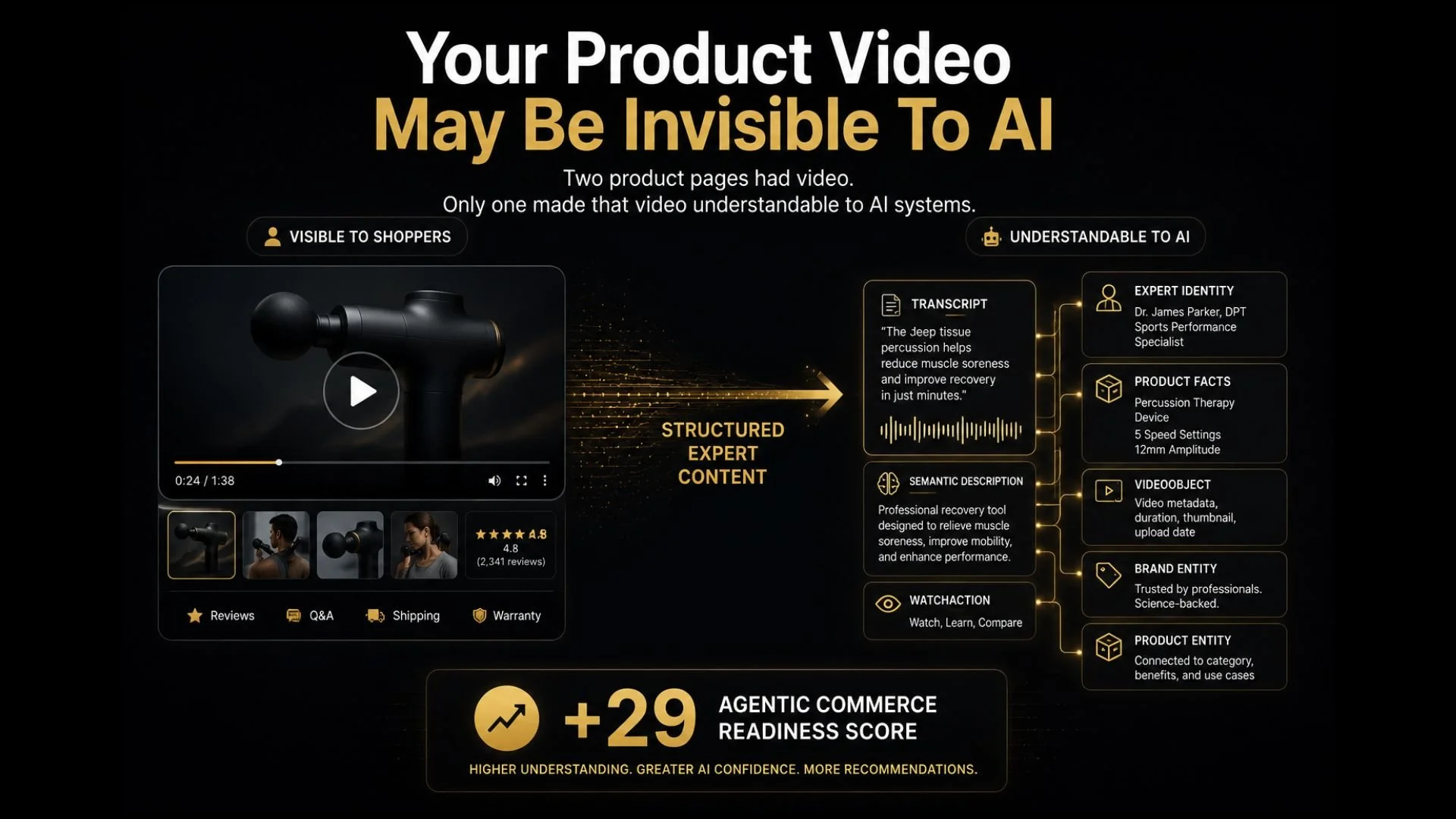
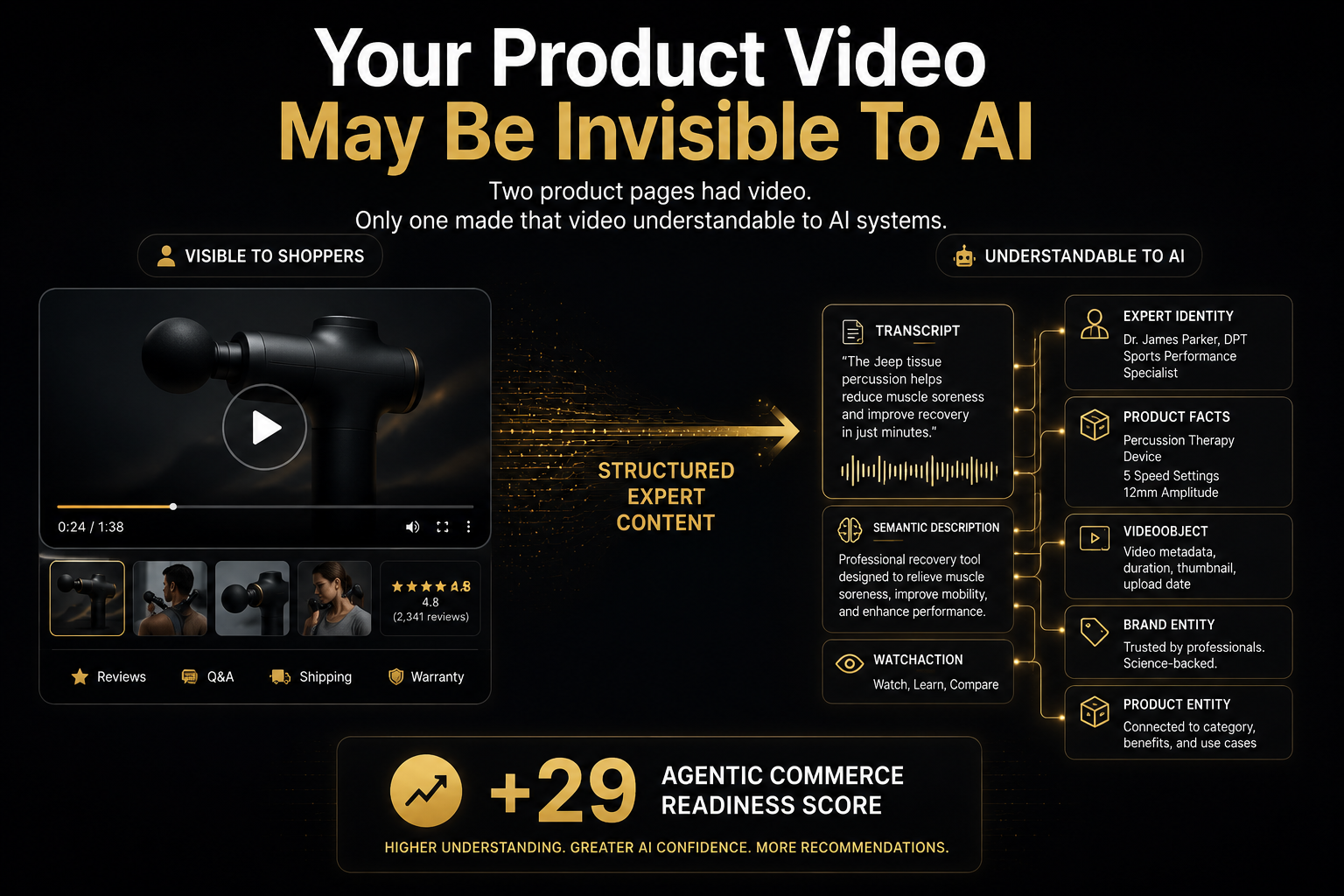
Both product pages contained video. Only one made that content understandable to AI systems through structured expert content, transcripts, and machine-readable schema.
While the higher-performing page scored better across nearly every category, the biggest gap appeared in Agentic Commerce Readiness.
A 29-point difference.
That matters because Agentic Commerce Readiness measures how effectively AI systems can understand, evaluate, explain, compare, and recommend products.
In other words:
One page was built for shoppers.
The other was built for shoppers and AI.
Can AI Recommend Your Product?
Most brands have never tested whether AI systems can actually understand their product pages.
Our free Instant Product Page Audit evaluates:
Human Conversion Readiness
Agentic Commerce Readiness
Product education effectiveness
Structured data and schema
AI discoverability signals
Trust and recommendation factors
→ Try The Free Instant PDP Audit
The Shift Most Brands Haven't Noticed Yet
Historically, product pages had one job:
Help a shopper make a purchase decision.
Today, product pages have two jobs:
Convince a human shopper.
Provide evidence to AI systems.
That's a massive change.
AI shopping assistants do not browse product pages the way humans do.
They do not watch videos the way humans do.
They do not interpret visuals the way humans do.
Instead, they look for:
Structured information
Explanations
Context
Trust signals
Evidence
Relationships between products, benefits, and outcomes
If those signals are missing, AI has less confidence in the product.
And lower confidence often means lower visibility.
Both Pages Had Video
Both product pages included video content designed to educate shoppers and demonstrate product functionality. Both invested in helping consumers make more informed purchase decisions. Yet one page dramatically outperformed the other in AI readiness.
The difference was not the presence of video. It was whether the information inside that video was accessible to AI systems. One page transformed product education into machine-readable knowledge through structured expert content, transcripts, and schema. The other did not.
The Difference Was Structured Expert Content
The higher-scoring page did not simply contain a video.
It contained structured expert knowledge.
The page included:
VideoObject schema
Machine-readable transcripts
Expert identity signals
Structured product benefits
Product-specific attributes
Semantic descriptions
Product-to-content relationships
Machine-readable outcomes and use cases
Together, these signals allowed AI systems to understand:
What the product does
How it works
Who it is for
Why it is different
Why it should be trusted
Instead of simply recognizing that a video existed, AI could understand the information inside the video.
That distinction is becoming increasingly important.
Where The Biggest AI Readiness Gains Came From
The 29-point difference in Agentic Commerce Readiness was not driven by a single factor.
It was the result of multiple understanding signals working together.
Where The Biggest AI Readiness Gains Came From
The largest improvements came from Explainability, Structured Truth, and Semantic Clarity. Together, these categories accounted for the majority of the performance gap.
The largest improvements came from:
Explainability
Structured Truth
Semantic Clarity
Machine Commerce Signals
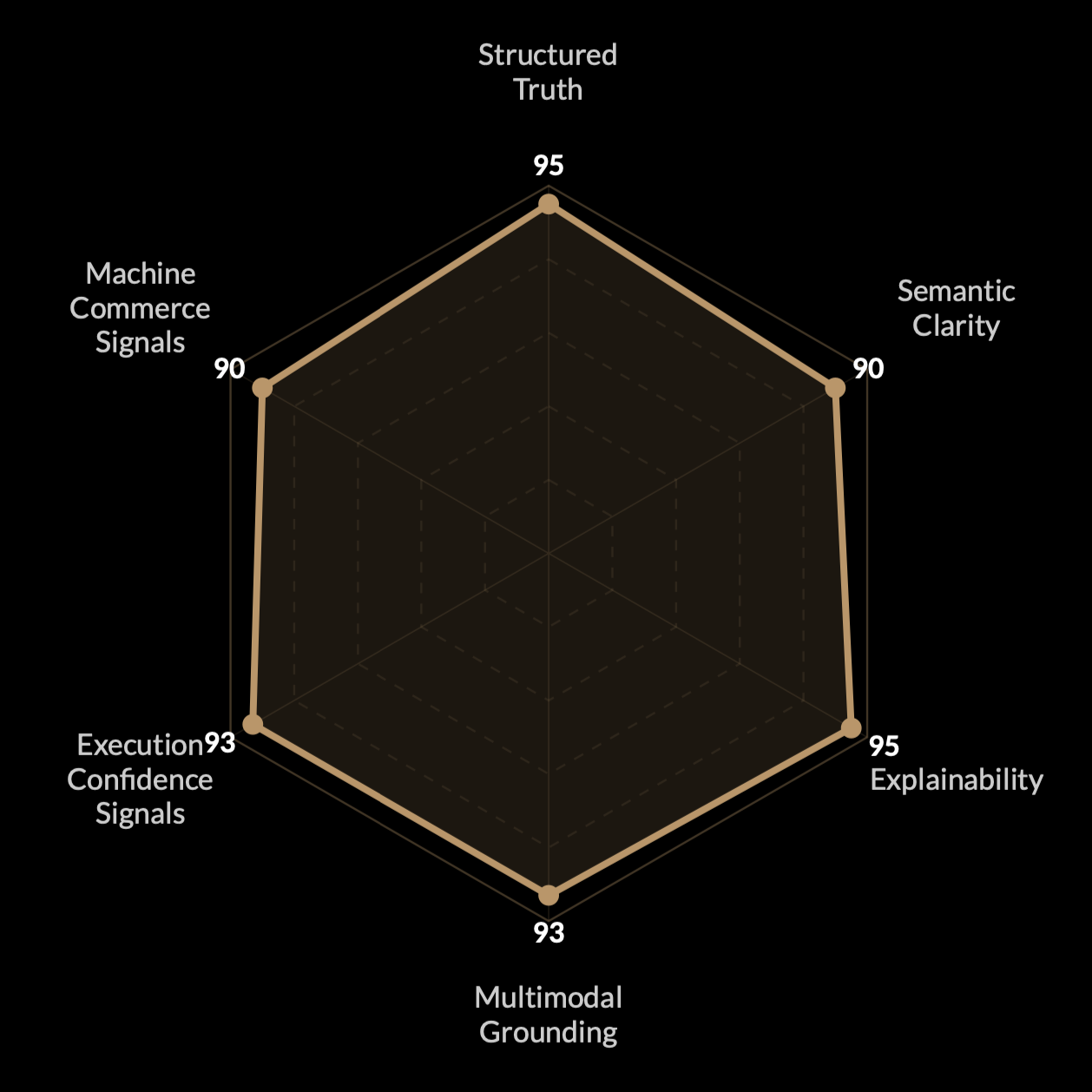
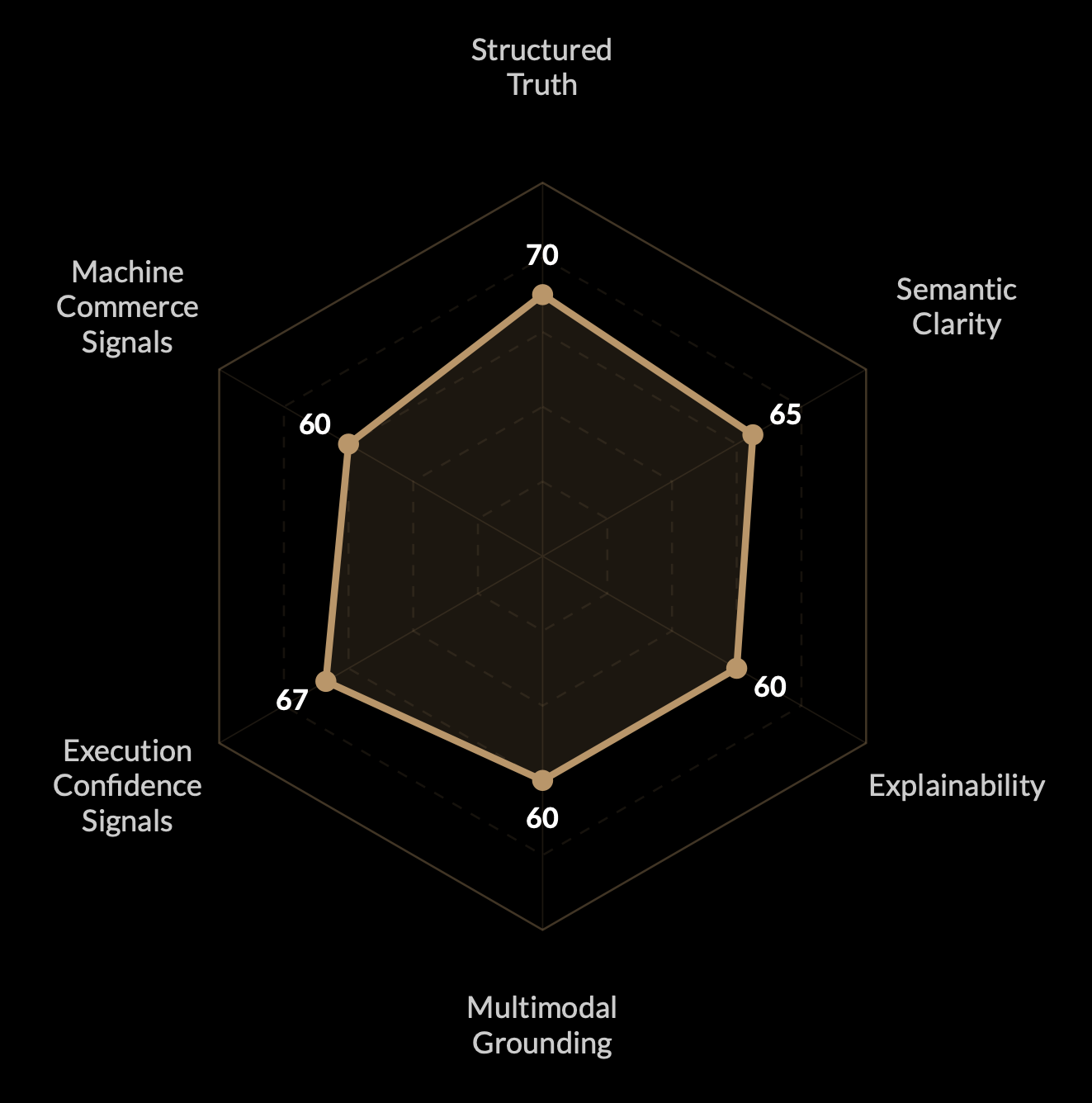
Together, these categories accounted for the majority of the performance gap.
Explainability: The Largest Difference
Difference: +7 points
The strongest-performing page helped AI understand not only what the product was, but why it mattered.
Because the page included machine-readable transcripts, expert explanations, and structured benefit descriptions, AI could better interpret:
Performance advantages
Product outcomes
Feature-to-benefit relationships
Real-world use cases
The lower-scoring page contained much of this information for human shoppers, but the information was not exposed in a format AI could easily interpret.
The content existed.
The understanding did not.
Structured Truth: Giving AI Something To Trust
Difference: +5 points
The highest-scoring page provided significantly richer structured signals.
These included:
VideoObject schema
Product schema
Structured benefit descriptions
Machine-readable product attributes
Video metadata
Educational content connected directly to the product
This gave AI systems clearer evidence they could retrieve, reference, and trust.
The lower-scoring page still contained valuable information, but much of that information remained disconnected from structured data.
Semantic Clarity: Connecting Features To Outcomes
Difference: +5 points
AI systems need more than keywords.
They need context.
The higher-performing page created stronger relationships between:
Product features
Benefits
Outcomes
Shopper needs
Expert recommendations
This made it easier for AI systems to understand who the product was for and why it should be recommended.
Multimodal Grounding: The Video Problem
Difference: +5 points
This may have been the most interesting finding in the entire audit.
Both pages had video.
Only one page made that video understandable to AI.
The higher-scoring page connected:
Video
Transcript
Descriptions
Product attributes
Structured metadata
into a unified machine-readable experience.
The lower-scoring page contained video, but much of the educational value inside the video remained inaccessible to AI systems.
That is why we say: Your product video may be invisible to AI.
Execution Confidence Signals
Difference: +4 points
Before recommending a product, AI systems look for confidence signals.
The strongest-performing page reinforced confidence through:
Expert validation
Educational content
Review signals
Structured supporting evidence
These elements help AI systems determine whether a recommendation can be supported with trustworthy information.
Machine Commerce Signals
Difference: +3 points
The final difference came from how effectively each page communicated information directly to machines.
The higher-scoring page included:
Structured transcripts
Video metadata
Machine-readable explanations
Product benefit data
These signals help AI systems answer shopper questions and generate stronger recommendations.
Why VideoObject Alone Is Not The Story
Many conversations about AI optimization focus on VideoObject schema.
That is important.
But it is not the story.
The story is what the schema contains.
The strongest AI-ready content does not simply tell AI:
A video exists.
It tells AI:
Here is what the expert explained.
Here is what problem the product solves.
Here is who should use it.
Here is why it performs differently.
Here is the evidence supporting those claims.
This is the difference between content and knowledge.
Increasingly, AI systems reward pages that provide knowledge.
What Makes Product Education AI-Readable?
At The Desire Company, we think about this as transforming product videos into structured decision infrastructure.
Several signals work together to make this possible.
Machine-Readable Transcripts
Transforms spoken expertise into searchable, retrievable evidence.
Semantic Descriptions
Provides context about what the content teaches and why it matters.
Expert Identity Signals
Connects recommendations to credentialed professionals.
Structured Product Facts
Exposes benefits, outcomes, and differentiators as machine-readable attributes.
Product And Brand Relationships
Creates a clear knowledge structure between products, content, experts, and brands.
Action Signals
Helps AI systems connect product understanding to conversion opportunities.
Together, these elements transform content from something that can be watched into something that can be understood.
The Bigger Shift Happening In Ecommerce
For years, ecommerce teams focused on:
SEO
Conversion optimization
Reviews
Merchandising
Visual content
For years, ecommerce teams focused on improving the experience for human shoppers. Product pages were optimized for search engines, conversion rates, reviews, merchandising, and visual content.
Those fundamentals still matter. But product pages now serve a second audience alongside human shoppers: AI systems.
AI shopping assistants, recommendation engines, large language models, and emerging agentic commerce platforms are increasingly influencing how products are discovered, evaluated, and recommended.
Unlike human shoppers, these systems are not simply scanning product pages for keywords or visuals. They are looking for context. They are looking for evidence. They are looking for explanations they can retrieve and use to answer questions, compare products, and support recommendations.
The brands that make product information easier for AI systems to understand may be better positioned as AI-powered shopping continues to evolve.
That does not mean traditional ecommerce best practices are disappearing. It means product education, expert content, and structured information are becoming increasingly important parts of how products compete online.
As AI systems play a larger role in product discovery, understanding may become just as important as visibility.
How Does Your Product Page Score?
Most brands have never evaluated their product pages through the lens of AI understanding.
Our free Instant Product Page Audit helps identify:
Human Conversion Readiness
Agentic Commerce Readiness
Product education gaps
Schema opportunities
AI discoverability issues
Trust and recommendation signals
In just a few minutes, you'll see how effectively your product pages communicate with both shoppers and AI systems.
→ Run Your Free Instant PDP Audit
The Key Takeaway
Most brands believe they are AI-ready because they have product videos.
But AI does not recommend products because videos exist.
AI recommends products because it understands the information inside those videos.
In our analysis, the page that transformed expert product education into machine-readable decision signals achieved a 93/100 Agentic Commerce Readiness score, compared to 64/100 for the page where those signals remained inaccessible to AI systems.
The lesson is simple.
Content That Can Be Watched Is Not The Same As Content That Can Be Understood
As AI-powered shopping continues to grow, product pages need to do more than display information.
They need to communicate it clearly to both shoppers and AI systems.
The brands that succeed will be the ones that help AI understand:
What the product does
Why it matters
Who it is for
Why it should be trusted
Because in agentic commerce, understanding drives recommendations.
Can AI Recommend Your Product?
Most brands have never tested whether AI systems can actually understand their product pages.
Run the free Instant Product Page Audit below and discover how your page performs across conversion, product education, trust signals, structured data, and Agentic Commerce Readiness.
It takes less than a minute to get started.
Want to learn How Expert Led Content Works?
The Desire Company helps brands and retailers increase conversions, build shopper confidence, and lower returns with expert driven video content that performs across every channel.
Fill out the form and an account executive will reach out shortly to schedule your discovery call and demo. We will show you how to turn product content into measurable results.
LATEST CASE STUDIES



Related case studies